

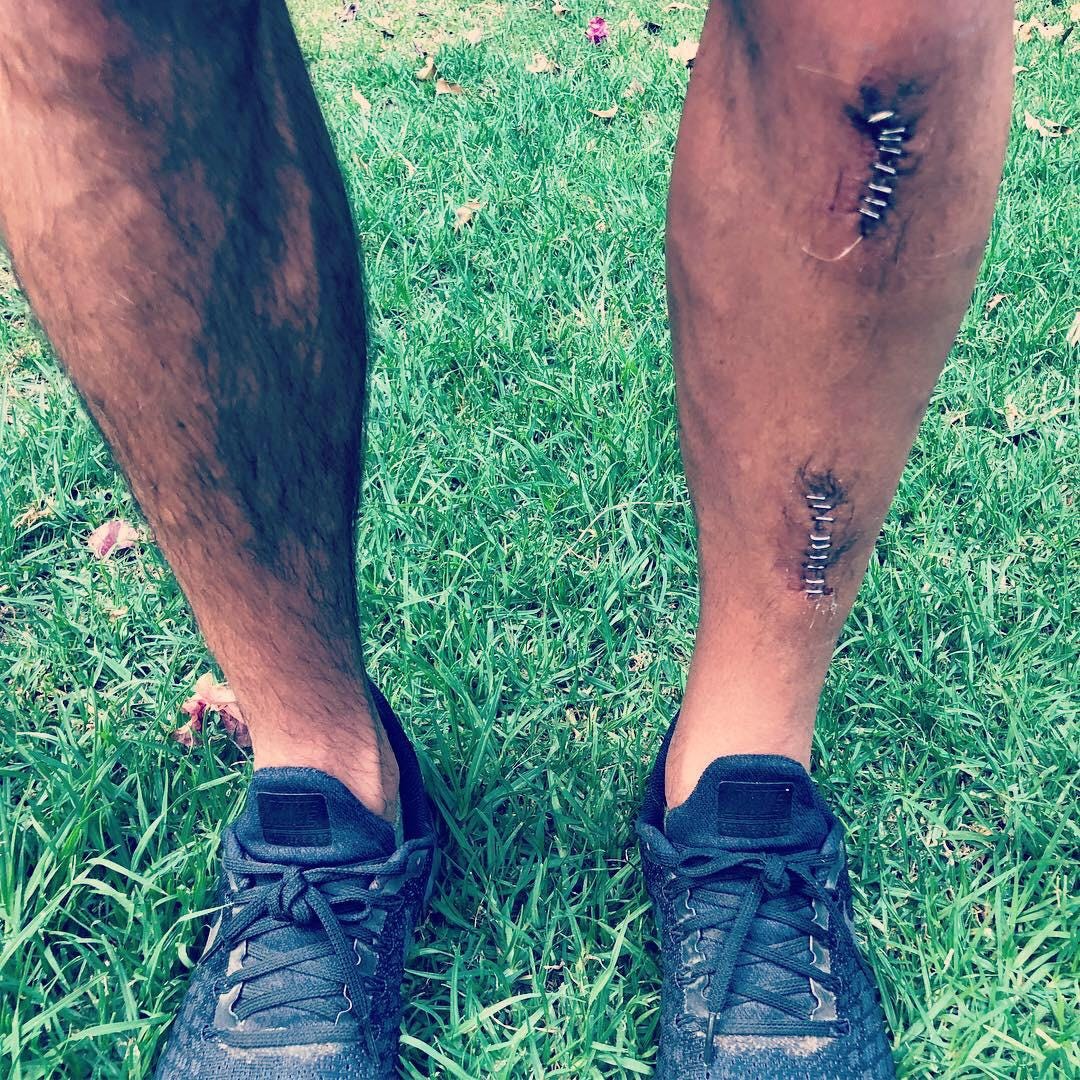
I was training for the 2019 Boston Marathon.
Everything was going according to plan.
One morning, out of nowhere, I decided to do box jumps on a steel bench in the park to train my quads.
Bad idea.
Mid-air, my toes clipped the edge.
I went forward.
Both shins split open, leaving my shin bone exposed, and I went directly to the ER.
Just like that, my Boston plan evaporated.
The Moment After the Plan Dies
Lying there, I wasn’t thinking about pain.
I was thinking: Now what?
That’s the moment most people freeze — in running, in business, in life.
Because we don’t train for the plan breaking.
We train for the plan working.
What Actually Saved the Race
I couldn’t run for weeks.
So I trained everything else.
Pool running. Strength work. Mobility. Form.
Twice as hard.
To my surprise, when I came back, I wasn’t behind; I was better and ran my fastest marathon time ever.
The plan didn’t save me.
Adaptation did.
Business Is the Same Game
At its peak, BlackBerry controlled over 50% of the mobile phone market.
The plan worked — incredibly well — until it didn’t.
When the smartphone era arrived, BlackBerry clung to what had made them successful: keyboards, security, enterprise users. By the time they tried to adapt, the market had already moved on.
By 2016, their market share collapsed to 0.1%.
Most founders and managers respond to change by tightening their grip on the plan.
That’s how companies die.
The good ones do what runners do mid-race:
adjust pace, change strategy, and keep moving forward.
3–2–1 Sprint
3 Shifts to Make
Measure progress by learning speed, not forecast accuracy.
Optimize for recovery when things break, not for perfection when they don’t.
Make adaptability the core value, not perfection.
2 Quotes
“Everyone has a plan until they get punched in the face.” — Mike Tyson
“It is not the strongest of the species that survives… but the one most responsive to change.” — Charles Darwin
1 Question to Ask Yourself
Am I mentally and structurally ready to change paths if things don´t work out?
Contrarian Corner
Sticking to the plan is often just a more comfortable way to fail.
Takeaway
That injury hurt — physically and mentally.
But in hindsight, it removed the illusion that control was ever real.
What replaced it was better:
The realization that embracing change isn’t a weakness — it’s the actual winning muscle.
Thanks for reading.
Share Forget the MBA: