

Last year, I was having tea with a group of entrepreneurs and adventure seekers somewhere deep in the Sahara Desert. We were about to embark on a 250-kilometer ultramarathon across the dunes.
One of them mentioned a podcast he’d heard about a man who had done a “darkness experience.”
You are placed in a room buried inside the hills of Oregon - alone in absolute
darkness for four days with no light, no sound, no phones, no clocks, no stimulation of any kind.
The idea instantly grabbed me. Mysterious. Primitive. Raw.
I emailed Scott, the owner. The earliest opening was in 2027, three years away— it sounded safely far. I paid the deposit.
A few months later, out of nowhere and without much thought, I sent him another email:
“Any chance you’ve had cancellations? I’d love to come sooner.”
“You’re in luck,” he replied. “A cancellation just opened for next month. Do you want it?”
A cold shiver ran through my spine as I read those words.
One month? That’s too soon.
But I had already taken the step. I couldn’t back down.
“Amazing!” I emailed, pretending to sound excited.
The timing couldn’t have been worse. Our company had just acquired a competitor, and things were going through a rough patch. I was asked to step in as interim CEO—a rescue mission of sorts.
Overwhelmed with work and family commitments, I couldn’t prepare for the dark. I boarded the plane and put the audiobook Scott had recommended on at double speed.
As soon as the plane took off, I fell asleep, not to remember a single word.
Just as skipping marathon training, I’d soon pay the price for my lack of preparation.
Scott picked me up at a small airport in southern Oregon. He was barefoot, driving a dusty Toyota pickup.
We left the highway and climbed into the mountains. A herd of deer crossed in front of us. That’s when I realized I’d forgotten to tell my family I was about to lose cell coverage. Too late.
Scott kept driving up the Oregon hills. The scenery was beautiful, but my thoughts began to twist as I acknowledged how unreachable I was.
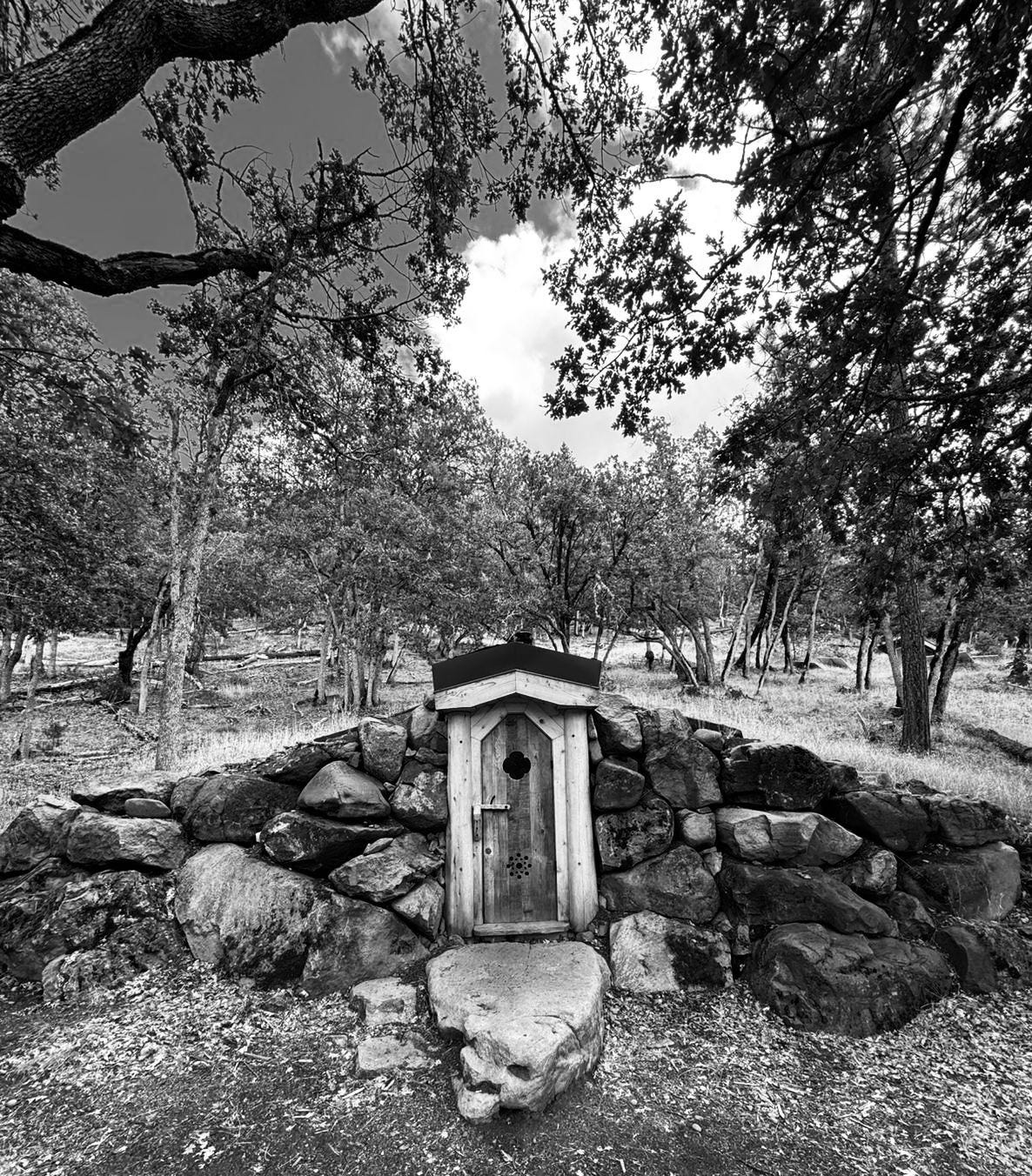
Eventually, we arrived. Scott parked and dropped me at the entrance of my “cave”—a small room built into the side of a hill. He invited me to walk in.
As soon as we crossed the doorway, the air shifted—from fresh mountain breeze to a still, confined atmosphere. A second chill ran through my neck.
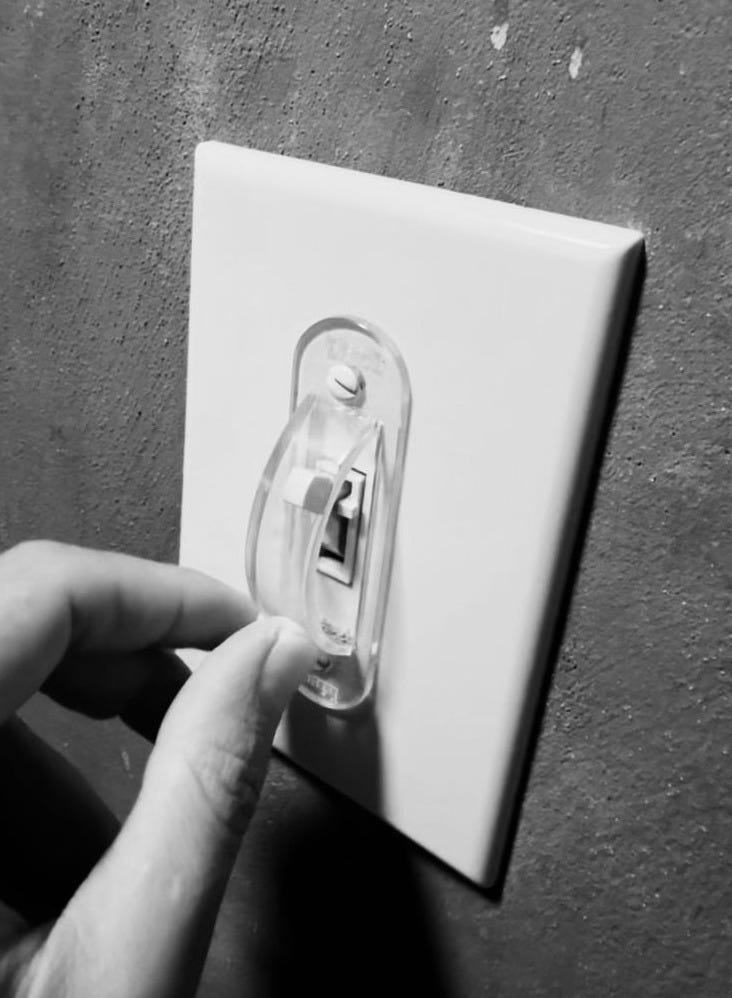
Scott showed me the basics: how to use the tub, where the toilet paper was—the essentials. I noticed there was no mirror above the sink. Then he showed me how the light switches were protected by a plastic cover that had to be popped open to use.
“I didn’t know I’d be able to turn the light on if I wanted to,” I said.
He laughed. “Of course, this isn’t a prison. If you want to leave the dark, that’s your choice. The cover just keeps you from flipping it accidentally.”
He then walked me to the corner and pointed to an odd-looking object—something like a miniature reading lamp. He clicked it. A red light glowed.
“If at some point you feel the need to gently get out of the dark, this is your escape mechanism,” he said.
“Not me,” I thought. “I’d never cave.” My ego whispered.
Test Day
Scott explained that the first night was a kind of test run—to see what complete darkness felt like, to then come out sometime the next day.
“See you on the other side.“ He said, climbed into his pickup, and disappeared, leaving behind a cloud of dust.
“What? That’s it?” I thought. “What am I supposed to do now?”
The first thing I did was step back into the cave and shut the door. Completely alone, the third chill ran through my spine. Slowly, I approached the light switch. I stared at it for a long time. It felt like facing a nemesis. I lifted the plastic cover and, for the first time, tested complete darkness.
The moment I flipped the switch, a primal fear flooded every cell of my body. Instinct won—I turned the light back on.
In ordinary darkness, your eyes begin to adjust. Not here. This was black beyond adaptation—where even your own hands vanish inches from your face to never return.
Years earlier, on another adventure sailing across the North Atlantic, I remember thinking,
What are you doing? Why are you here?
For the first time since then, that question resurfaced.
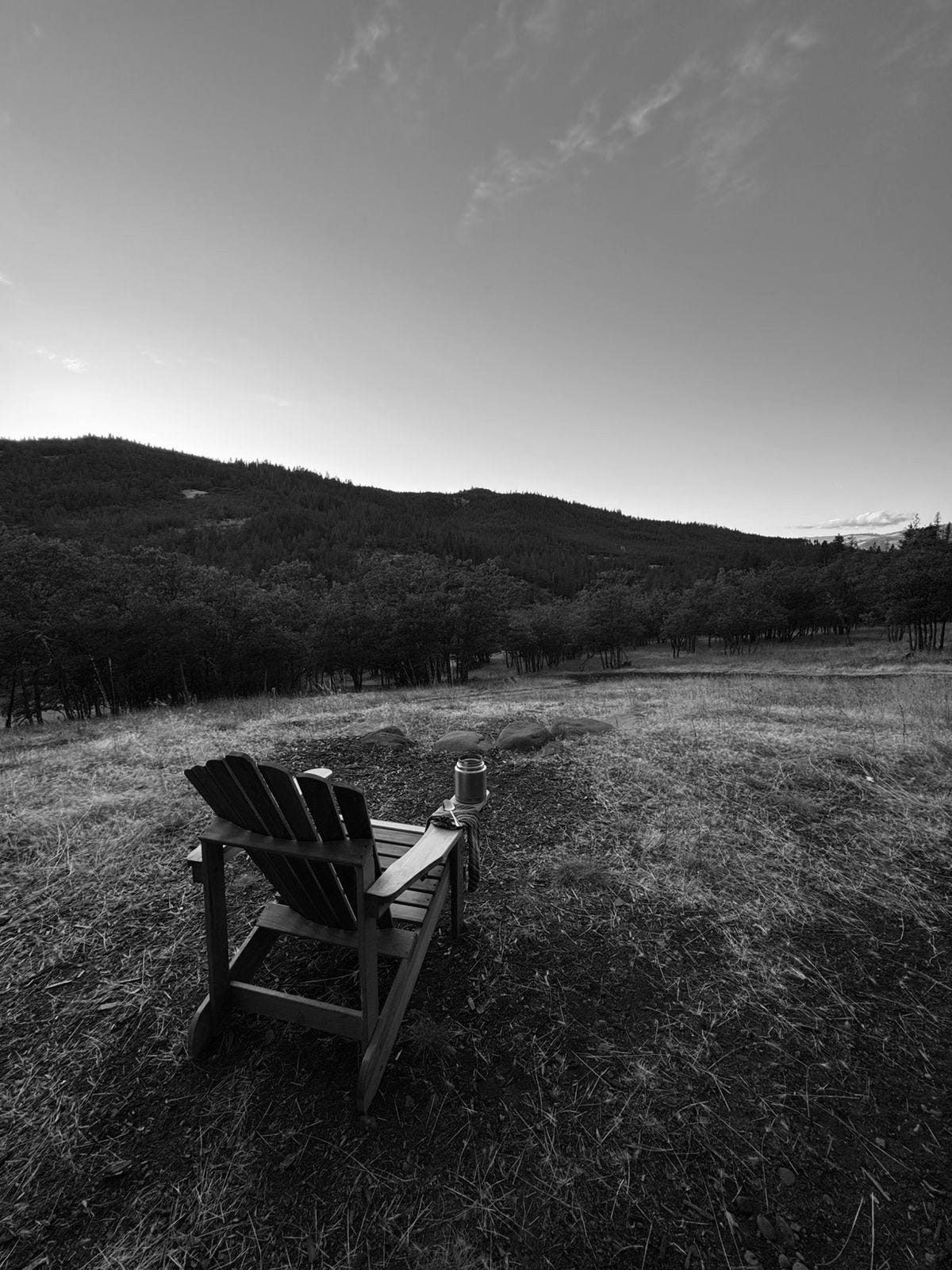
It felt strange to be inside, so I walked outside. The air, the trees, the sounds—everything was easier than what awaited behind that door. I spent the afternoon outside, sitting in a wooden Adirondack chair overlooking the hills, eating warm vegetable soup from a camping can that Scott had left me.
My last meal in the light.
As the sun began to set, anxiety crept in. I glanced behind me at the door buried in the hillside. I took a deep breath, stood up, and walked toward it.
Scott’s words echoed: Try to be in the darkness, and see how you feel.
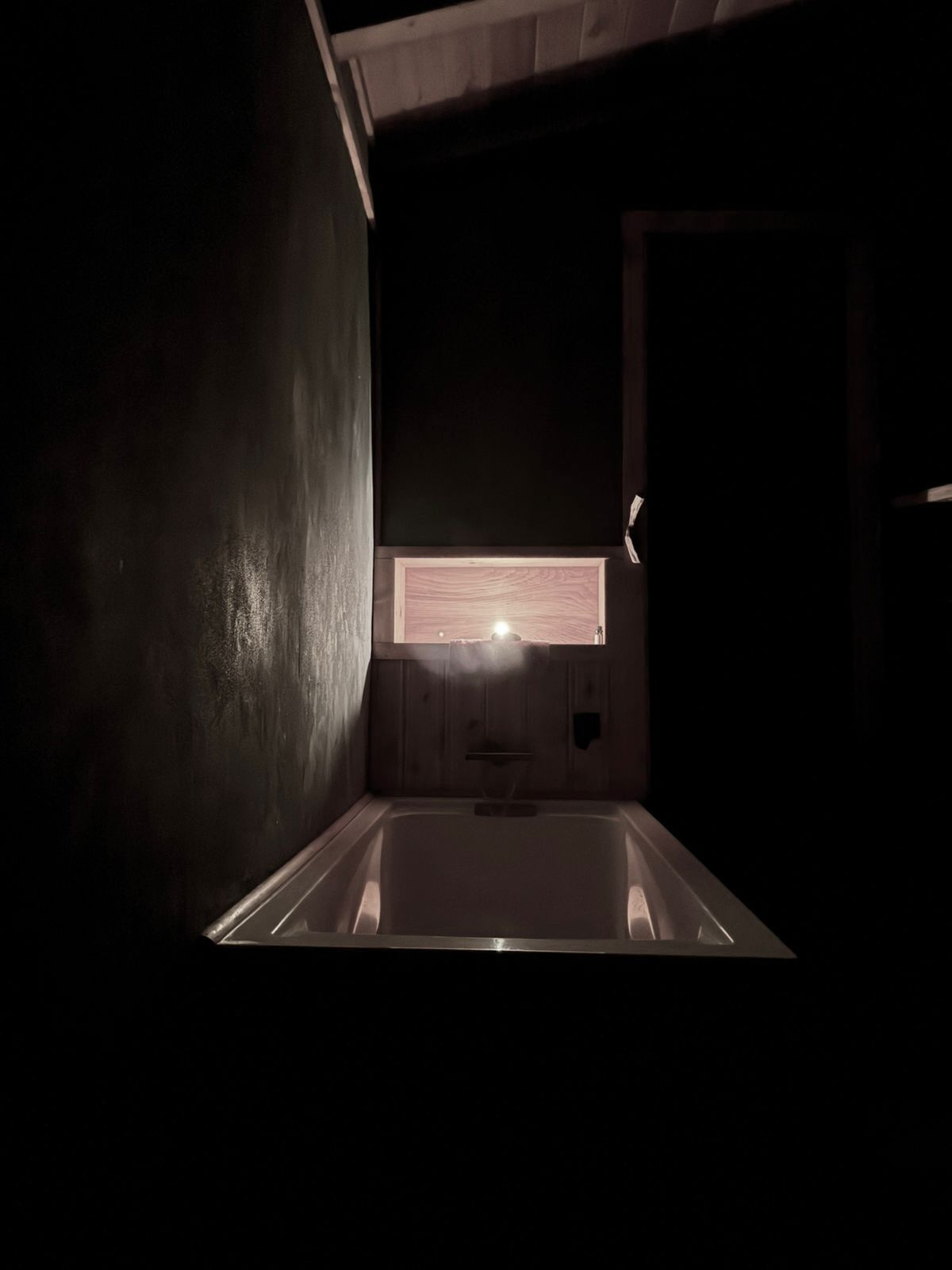
I’m a good student, so I followed the instructions. I walked in and shut the door behind me. I unpacked slowly, placing things logically where I could find them in the dark. I lit a candle and filled the tub for a warm bath.
Lying in the water, I watched the flickering flame. One thought filled my mind: That candle won’t burn forever.
There was no turning back.
When I got out, I stood in front of the candle, ready to blow it out—but I hesitated. I walked back to my bag, arranging things I didn’t need to arrange. I was procrastinating.
Finally, I faced the candle again and blew it out. In an instant, darkness swallowed me whole.
What are you doing? Why are you here?
I found the bed, and before my mind could spiral too far, I fell into a deep sleep.
At some point, I started dreaming—shapes, whispers, sounds. But then, I woke up abruptly. The sounds weren’t dreams; they were real. Someone was trying to force the door handle open. My eyes shot open into total darkness.
My body froze. Complete silence followed. My senses screamed to see, but there was nothing. Just black.
The sound came again—metal against metal, deliberate and slow. I was paralyzed. Freeze, fight, or flight? My system chose freeze.
I tried to yell, but my throat sealed shut. I lay frozen—like a deer sensing the faintest twitch of its hunter.
Finally, with effort, I forced out a few words.
“Scott? Is that you?”
Silence.
“Who’s there!?” I yelled, louder this time.
Then came the worst feeling of all: I sense someone is already inside, but I can’t see them.
That thought pulled me into another dimension of fear. Freeze turned into a cautious fight. Heart racing, I slowly pulled my legs off the bed, stretched my hands out in front of me, and walked forward, ready for whatever waited.
I remembered counting four steps from the bed to the door.
One. Two. Three. BAM!
On the fourth, my palms met the closed wooden door.
I shuffled my hand over the knob—still locked. Relief poured through me like a wave. No one was inside. No one was behind me.
I took a long breath, turned, and walked back. One. Two. Three. Four.
Back in bed, my heart began to slow. Then—click, clack! The sound again.
I jumped up, hurried to the door, but the noise had stopped. Fear evolved into frustration. What’s going on?
Then I heard it again—from above this time, softer, more organic.
Scott’s voice echoed in my memory: “Remember, the cave is built into the ground, so animals may walk over it.”
I exhaled, still uneasy but calmer. I grabbed my aluminum water bottle and set it by the door. If anyone opened it, I might not see them—but I’d hear the clatter of metal on stone.
Lying back on the bed, that bottle became my new sense of security.
And then, as I stared into the abyss, I realized something: It had never been a door handle, but an undeniably convincing story constructed by the mind.
That’s how fear works—it starts with an outside stimulus, but the real noise is the one your mind makes inside.
Fool me once.
I reached for my earplugs, slipped them in, and drifted into one of the deepest sleeps of my life.
I woke late the next morning, drained from the night before. All I wanted in that moment was to flick the light back on—but I resisted an early exit.
“Not on test day,” I told myself.
I moved through the dark, stretching, feeling for balance. Breakfast became an odyssey of its own.
Simple things became absurd puzzles in complete darkness. I misplaced and lost my towel for two days. When I tried to journal, I had to feel the tiny indentations my pen left on the paper, tracing them with my fingertips to avoid writing over my own words. Even adding the Tabasco I had brought to a meal was a gamble—sometimes nothing, sometimes a firestorm.
In a small compartment that connected to the outside, Scott had left ten Tupperware containers for the day’s meals.
The first challenge was to figure out what was in each one. I shook each one beside my ear, hoping the sound would tell me something. One rattled—nuts, maybe. The others, silence. I opened them one by one, touching, smelling, guessing.
Boiled eggs, I discovered—no doubt. I smiled at the small victory, then frowned as I hated boiled eggs.
I kept going and shaking, sniffing, exploring until I touched something that felt like a human finger. My body jolted; I dropped it instantly.
My mind again.
I reached back in, slower this time, and pulled out the “finger.” A chopped carrot.
I chuckled in the dark. Breakfast: boiled eggs and apples feel like a triumph.
By around one in the afternoon, I decided I’d done enough for the test day. I opened the door and let light flood the room—eighteen hours in darkness.
As I stepped outside, I couldn’t help thinking: If this was just the test, what’s the real thing going to be like?
Day One
Later, Scott drove me down to a small cabin deep in the forest—a lonely hut with a piano and a MacBook Pro on a wooden table. I had a Zoom call scheduled with a guide who would talk me through what to expect.
I told her about my horror-movie night. She smiled.
“Well, you had quite the adventurous first night,” she said.
“Doesn’t everyone?” I asked.
“Not really. Yours was pretty extreme with too much noise. Why didn’t you just turn the light on?”
I didn’t answer. She´s right. It was only the test night, why didn’t I?
Then she explained something that changed everything.
“Imagine you and I are walking through a dense forest in the middle of the day,” she said. “We hear a branch crack behind us. We turn and see it’s just a squirrel. We keep walking. If someone asked us later, we probably wouldn’t even remember the sound—it registered, but only subconsciously.”
“Now picture the same thing at night—pitch dark. No flashlight. We hear the same crack. We turn but see nothing. Our brain goes wild—cougar, bear, murderer. We crave visual confirmation to calm the alarm, but when sight gives us nothing, the imagination fills the void. That’s what happened to you in the cave. Your mind needed to protect you, so it created that horror story.”
I nodded slowly. So that’s what happened.
It struck me how often the same thing happens in entrepreneurship—when the path ahead isn’t clear, we fill the void with fear.
“Oh man,” I said. “I should’ve prepared.”
But that lesson—the medicine of the first night—was precisely what the patient needed for what was coming.
Before going fully offline for the next four days, I used Scott’s Starlink connection to call my family. They asked about the test night. “It was actually pretty good,” I lied.
I hiked back toward the cave, anxiety rising with every step.
As dusk fell, it was time to return to the unknown for the start of day 1.
Inside, I set up my bed and clothes, lit a candle, and turned off the lights. Sitting cross-legged on the floor, I stared at the flickering flame. I remembered my kids asking, “What are you most afraid of, Daddy?”
“I’m not sure,” I’d said. “But blowing out the candle seems pretty chilling.”
Now the moment had come. The feeling was identical to the seconds before a big marathon race—a collision of nerves, excitement, and trapped energy.
I looked at the candle. “Here we go,” I whispered, and blew softly. The flame danced, refused. I took a deeper breath and blew harder.
It went out.
For a few seconds, I could still see the red ember of the burning wick, but then even that vanished. Darkness—complete and alive—wrapped around me. It felt like the starting gun of an ultramarathon, except this time there was no release, no forward motion, just a plunge into a dark void.
I brushed my teeth, checked that the door was locked, placed the aluminum bottle in front of it, and crawled into bed.
I guessed it was around 8 p.m.
When I woke again, I thought it was 10 a.m. I felt restless, like I should get up and do something. Then I remembered what the guide had said:
“You might sleep a lot on your first day. Let your body rest—the following days won´t be as sleep-generous.”
So I did. I rolled over and surrendered. I think I slept eighteen hours in total, collecting twenty years of lost sleep.
Day One: hibernation.
Day Two
The next morning, I woke earlier—maybe seven? Scott had said he’d check on me in the morning, but Scott never arrived.
Perhaps I’d misheard him.
Around two p.m., he finally arrived.
“What time is it?” I asked.
“Eight a.m.,” he replied from outside the door.
Wait—what? That meant I’d woken at two a.m.
He asked where I was in the room. “On the bed,” I said, suddenly realizing something the guide had mentioned: Some people never leave their beds; it becomes their safe zone.
As if it weren’t embarrassing enough to admit I was still curled in the bed, he asks whether my eyes are open or closed. Only then do I realize — I’m on the bed, eyes shut. Fear had been sitting with me all morning, and I hadn’t even noticed.
Scott led me through an exercise.
“With your eyes closed, touch your fingertips together. Focus on that feeling. Now, without losing focus on your fingers, slowly open your eyes.”
I did. The fear was still there, but I felt in control.
After lunch, I sat on the floor. On the west corner of the room lay a meditation mat, but for some reason, I felt repelled by that corner. It felt… wrong. Creepy.
I heard the guide´s voice again: If there’s an area in the cave that scares you, go there.
Against every cell in my body’s will, I walked over and sat down. My stomach twisted. I tried to breathe.
Then something strange began to happen.
In the dark, with nothing to distract me, my mind started to play a movie from childhood. I was nine, playing ice hockey. My dad watched from the stands. I was part of the first line of my team—the strong line. I was a pretty good player.
I skated around the opponent’s goal. I could hear the scrape of blades on ice, as well as the tapping of sticks. A teammate passed me the puck. I moved forward, saw the opening, and… froze. I didn’t shoot.
The scene looped. Over and over, my nine-year-old self choking.
And then something unexpected happened.
The scene split. There were now two of me—the boy and the man.
I stepped toward my younger self. “Why don’t you shoot?” I asked softly.
“Are you afraid you’ll miss? Are you afraid of your coach or your dad?”
The boy looked down at his skates.
Silence.
Then, quietly: “I’m just afraid.”
My heart broke for him—so small, so alone.
I sat beside him, arm around his shoulders. The words that came out of me surprised me.
I’d grown up in a family of hypercompetitors. Typically, I would have said something like, Winners shoot, my boy.
But instead, I heard myself say,
“It’s ok to be afraid.”
The sentence hung in the air—simple, weightless, true.
I got close to his ear and whispered, “Let me tell you a secret. Close your eyes and press your fingertips together. Feel the texture, the warmth, the pressure. Stay focused on that feeling. Now, slowly open your eyes, but keep your attention on your fingertips.”
He did. And as he did, I saw relief spread across his small face.
For a moment, I forgot where I was.
Then I snapped back into the dark room.
“Wow,” I whispered out loud.
That afternoon, I told Scott what had happened.
“Have you seen Interstellar?” I asked.
“I have,” he responded without losing a beat, as if he knew where this was going.
I explained how I’d just lived my own Interstellar moment—the way the father in the movie speaks to his daughter across time. I felt like I’d reached back to my younger self to give him something priceless.
As I spoke, tears ran down my cheeks. It startled me; I had never cried in my adult life.
Scott listened quietly, then said, “You just reminded me of a poem.”
He drew a breath and recited, voice deep and clear:
We shall not cease from exploration
And the end of all our exploring
Will be to arrive where we started
And know the place for the first time.
When he finished, I said softly, “T. S. Eliot,” with what was surely a face of stupefaction.
Inside, I thought, This can’t be.
I’m not exactly a poetry person; Eliot might be the only poet I know by name. I’d come across his words only weeks before in a random post that hit me hard enough to Google him.
Coincidence or not, it left me still as a fox, sitting there in the dark, I thought, Maybe this is why I came.
When Scott left, unease and fear crept back. I became frustrated. I’d seen more than I’d asked for, but all of a sudden I was back at it. “Darkness is more like a rollercoaster than a steady line.” The guide had said. One moment you’re a serene Samurai, the next, a terrified child.
I sat on the low desk and scribbled in my notebook:
Two more days. #embracethestruggle.
Day Three
An unusual calm settled in. I spent most of the day lying on the floor, staring into nothing. Time dissolved.
“Nothing happened today,” I wrote later. “I feel like a still lake.”
I always hurried away from the small desk after jotting notes; that corner felt uneasy, too. But that night I forced myself to stay. Resting my forehead on my folded arm, I started to hum—ommm… ommm…— that meditation sound you see performed by monks. I didn’t mean to, I just started doing it. The vibration pulled me deeper and deeper until I slipped into the most profound meditation I’d ever experienced.
Once again, a new insight arose where fear was waiting. I was starting to see a pattern.
Day Four
The next morning, eager to return to that state of mind, I went straight to the meditation mat—the same one that had once felt haunted. It no longer did. I sat down and began chanting aloud again. Soon, I was outside myself, watching the person who was meditating. At times, I was in the cave; at others, somewhere high in the Himalayas. My mind was still, like glass water.
A knock brought me back.
“Juanca,” Scott called. “It’s time. Are you ready to walk into the light?”
A strange conflict rose in me. Part of me wanted out—desperately. Another part wanted to stay, to slip back into that other world.
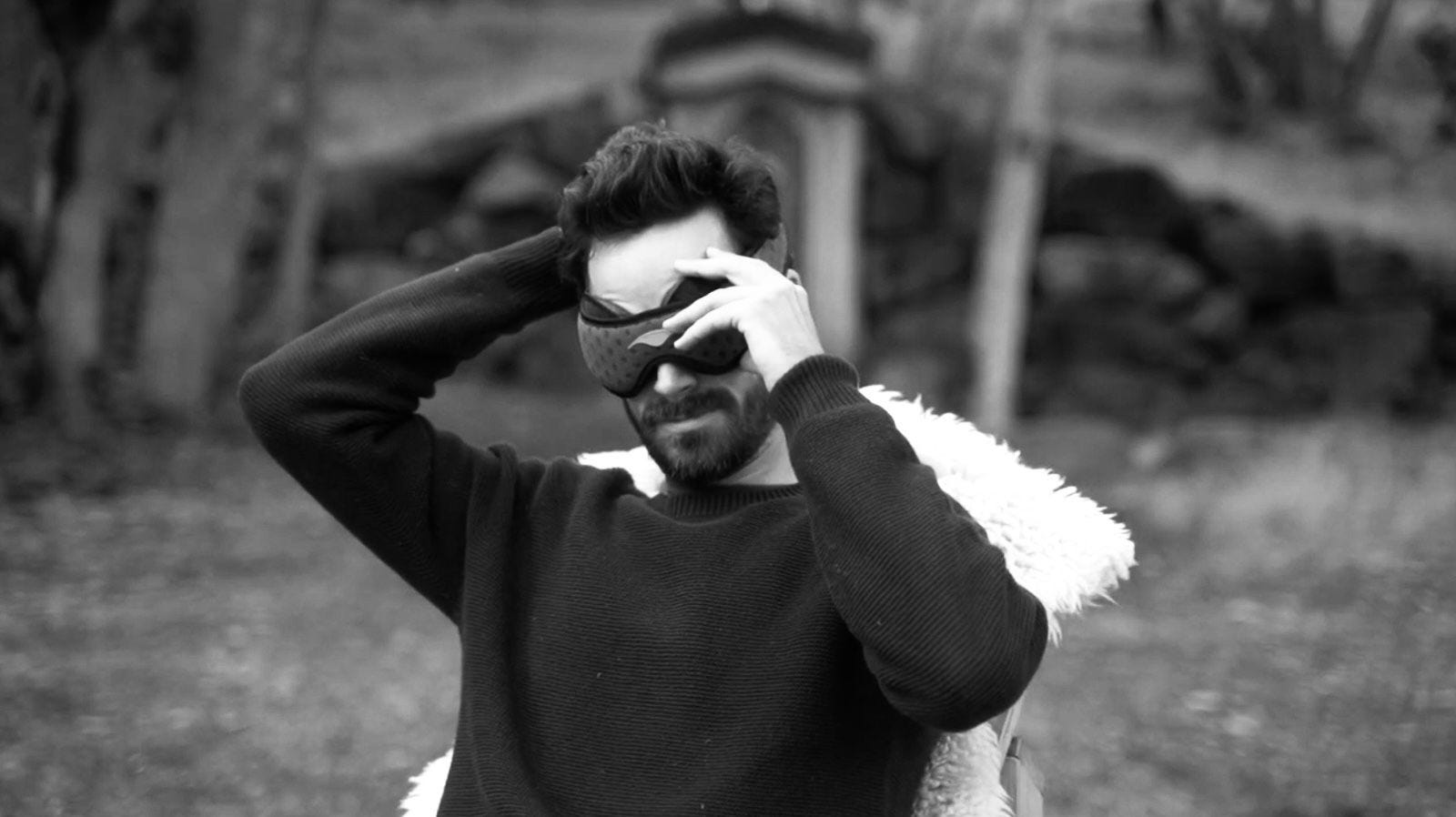
I stood, found the eye mask, and tightened the Velcro behind my head.
“Let me know when you’re ready,” he said.
“Ready.”
I removed the lock and pulled the door open—BANG! - the noise from the aluminum bottle tipping over.
I’d forgotten the aluminum bottle I’d left there on day one. I couldn’t help but laugh at my paranoid earlier self.
Barefoot, I stepped outside.
A rush of cool air hit my face—pure, wild, divine. I’d been craving light, but I hadn’t realized how heavenly a breeze could feel after four days underground.
My foot landed on a large flat stone. It was cold and smooth, and the texture under my skin felt alive.
Scott took my arm and guided me slowly toward the same chair where I’d eaten my last meal in the light. Each step was its own adventure—the crunch of gravel, the brush of wind, the sound of forest life waking up around me.
A flock of geese passed overhead. I stopped, listening.
When we reached the chair, Scott helped me find the armrests. “Whenever you’re ready,” he said.
I sat still for a long time, just listening—the birds, the rustle of leaves, the deep quiet between sounds.
Finally, I reached back and undid the Velcro. I lifted the mask but kept my eyes closed. My eyelids glowed orange; the first color I’d seen in days.
Slowly, I opened them. The flood of light felt overwhelming, like drinking from a fire hose. My eyes adjusted by tiny increments until I could focus on the mountains in front of me.
Then, unexpectedly, disappointment hit. My chest tightened; my breath turned shallow.
Scott must have noticed. “What’s wrong?” he asked.
I hesitated. I didn’t want to sound shallow or ungrateful.
“For some reason, I feel… disappointed,” I said finally.
He stayed silent.
“I thought this would feel like a rebirth,” I continued. “I tried not to watch too many videos about dark retreats, but the few I saw—people were sobbing when they came out, saying they were seeing God. I don’t feel that. I feel like the same guy. Like I was sitting here eating vegetable soup from a camping can a few hours ago.”
Scott smiled—not pity, but understanding.
“You had a less common journey,” he said. “For reasons I don’t fully understand, some people begin to feel at ease in the dark. The more serene you become, the smaller the contrast when you take the facemask off.”
“I was definitely not ‘at ease’ but… yes, somehow it all felt like it happened in an instant.” I thought.
That Friday afternoon, as we drove out, Scott stopped by another cave to deliver food to someone still inside. He took a long time. When he returned, I asked, “Everything ok with my neighbor?”
He nodded. “Yeah. He was here last year, too, and has come back to continue the work.”
“What? People come back?”
I laughed. “What a lunatic.”
But a few weeks later, back in the noise of regular life, I understood why people go back to the dark—the silence, the solitude, the no-hurry. It feels nourishing to disappear into the mountains - you feel like Musashi.
Return
When friends asked if I’d recommend it, my answer was always the same:
A hard no—unless you really feel called. If you do, follow that instinct.
When they asked what it was like, I’d pause and say:
“It’s part nightmare, part enlightenment.”
In the dark, I didn’t beat fear. I just stopped running from it.
I sat with it. I stared into it. It stared back.
And after a while, I realized fear wasn’t trying to stop me—it was trying to show me something.
Coming out, I expected to cry and feel reborn. I didn’t. I was the same guy in the same chair overlooking the same hill—but something had shifted.”
That’s what Eliot meant. You go far, you struggle, you face the dark… and somehow you come back to where you started—and see it for the first time.
I saw something in the dark that cannot be unseen.
I’ll tell you a little secret.
“It’s ok to be afraid. That is the way.”
September, 18th 2025