


Breaking the 2-hour marathon barrier is impressive, but what happens next is far more interesting.
For decades, the sub-2-hour marathon was treated as untouchable. The final frontier. Not just hard, but bio-mechanically impossible.
And then it happened.
Naturally, the explanations started pouring in:
It was the Adizero shoes
It was the Maruten gel protocol
Bla bla bla…
Before we credit Adidas with the feat, lets go back in history.
In 1954, a running story would prove that humans are limited by one governing factor: not biology, but our minds.
In professional running, there was one barrier that had stood for decades: breaking the 4-minute mile (running four laps around a track in under four minutes).
By the 1950s, this had become the holy grail of athletics. It had been an unreachable dream of professional athletes since the late 1800s. It was considered physically impossible for a human being.
At the time, experts compared it to climbing Everest, a feat that had not yet been accomplished.
Until 1954. An unassuming medical student from England, Roger Bannister, stepped onto the track and ran a mile in 3:59.4.
The world was stunned.
But here’s the part that was even more stunning: 46 days later, someone else did it.
Within a year, multiple runners had done it.
Today, thousands have.
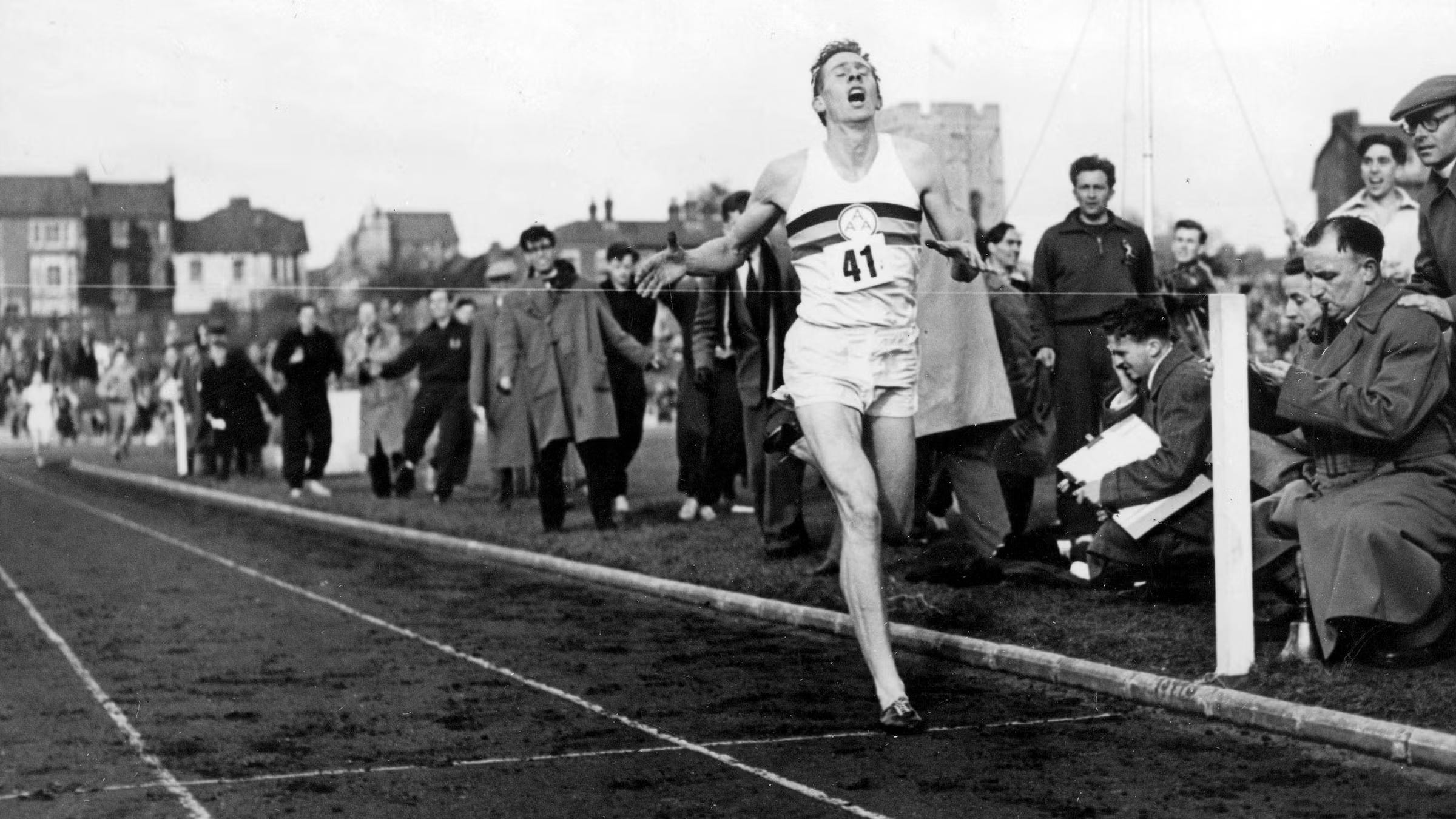
What changed?
Not human biology nor technology.
Belief.
The barrier wasn’t physical. It was psychological. And once it cracked, the floodgates were opened.
We’re at that exact moment again.
The sub-2-hour marathon didn’t just break a record.
It broke permission.
And once permission is granted, nothing is ever the same.
My bet: this won’t be a once-in-a-generation anomaly.
It will become the new standard faster than most people expect.
Beyond Endurance Sports
This pattern shows up everywhere, especially in business.
Most limits aren’t imposed by markets, technology, or competition.
Limits are imposed by people.
More specifically: by what people believe is possible.
I’ve seen teams celebrate hitting $1M in revenue like it’s the finish line. Then they plateau.
Not because they can’t grow, but because, subconsciously, that was the goal all along.
The ceiling wasn’t real. It was chosen.
Same with founders.
You hear it all the time:
“That scale isn’t realistic.”
“That’s not how this industry works.”
Says who?
Before Bannister, everyone “knew” the 4-minute mile was impossible.
They weren’t lazy. They were just operating inside an inherited limit.
The dangerous thing about limits is not that they exist.
It’s that they feel true… until someone breaks them.
The best founders have one trait in common:
They question ceilings aggressively.
If we did $1M, why not $10M?
If $10M, why not $100M?
Not blindly. Not delusionally. But with a refusal to accept that current reality defines future possibility.
Because once a team sees something is possible, execution follows.
Just like in running.
So here’s the real takeaway:
When something feels impossible, don’t accept it at face value.
Ask one simple question:
“Wait, but why?”
Because sometimes the only thing standing between where you are and the next level…
…is belief.
“What do you think you become.” Buddah
Thanks for reading.
Share Forget the MBA: