
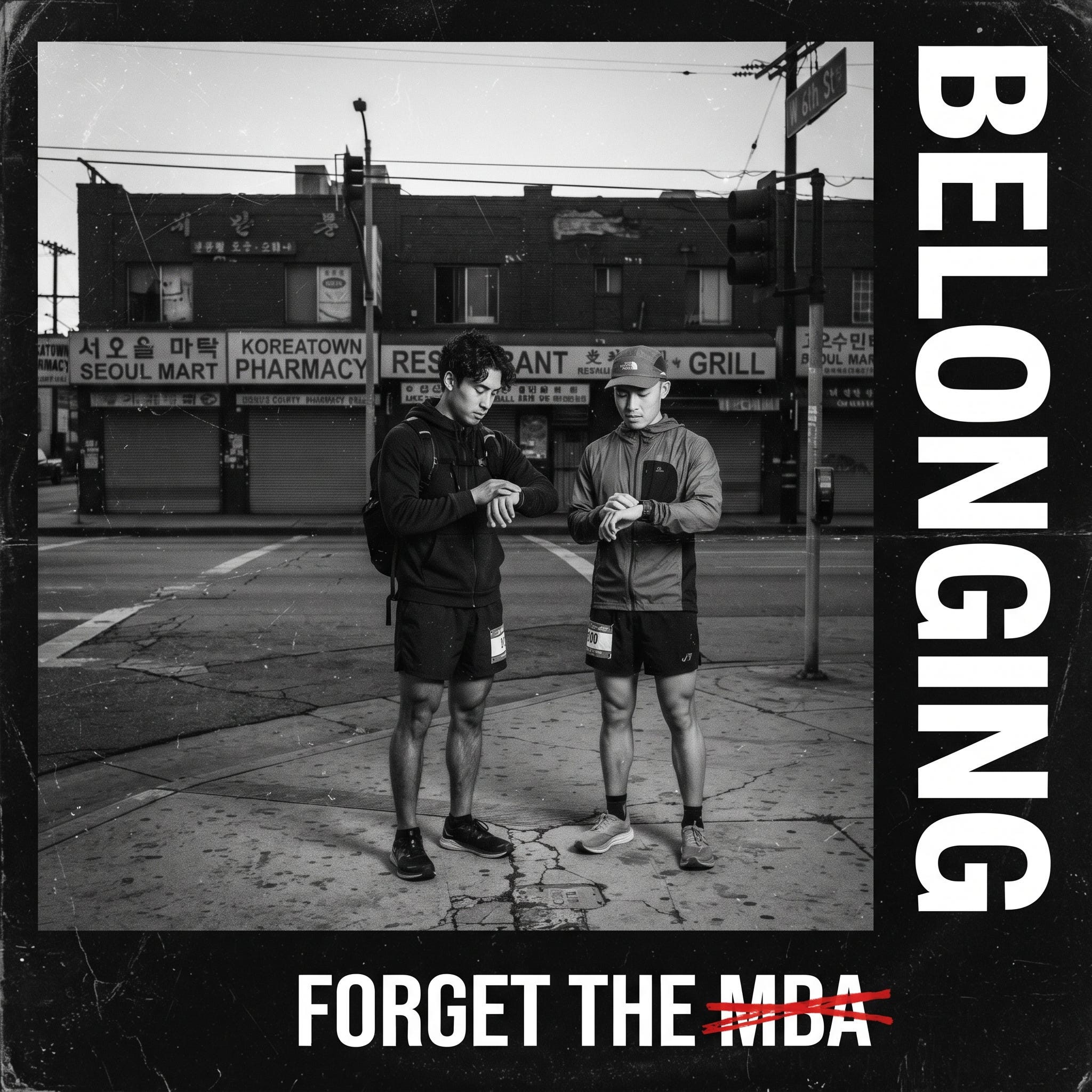
In April 2016, two friends stood on a corner in Koreatown in NYC and waited to see if anyone would come.
Duy Nguyen had wanted to start a soccer club. Fields cost money and carry liability, so he settled on running. His co-founder Michael Pak put it plainly: you could run for free, and people could come out at their own will. That was the entire business plan.
About twenty people showed up that first night. Most of them were friends doing them a favor.
Today, an LAist feature on the club counts hundreds at a time, roughly eight hundred to a thousand runners in a typical week. Nike has designed sneakers with them. The L.A. Marathon hangs a banner for them.
That took ten years. Nguyen says they never planned any of it. The idea was spur of the moment.
The turn came in a conversation. A woman told Pak the club had carried her through her drinking.
“That’s when a light bulb went off. They have their own personal life, they’re going through their demons in life, and for them to express those feelings at a run club where they don’t know anyone, I realized, well, if it’s just that story, I’m sure there are thousands of other stories.”
Nobody joined for the running. The running was the excuse.
When it gets real
Strava has the receipts.
The company filed confidentially to go public this year. Two hundred million registered athletes. Around $500 million in recurring revenue at a valuation in the billions. Only a sliver of those athletes pay anything.
Because Strava does not sell GPS tracking. Your phone does that for free.
Look at what its own year end report counts instead. Fourteen billion kudos in a year, up twenty percent. A million clubs. And the detail that gives the game away: a group activity earns twice the kudos of a solo one.
Fourteen billion times, someone tapped a thumb to say they saw you show up.
Then this. More than half of Gen Z plan to use Strava more next year, while expecting Instagram and TikTok the same or less. The attention platforms are losing to the belonging ones.
The feature was never the moat. The group that formed around it was.
Worth your time
Read The Art of Gathering by Priya Parker. She has spent her career designing rooms where something actually happens, from conflict negotiations to dinner parties. Her argument is that most gatherings fail before anyone walks in, because nobody decided what the thing was for. You will not run a meeting, an offsite, or a Saturday morning the same way again.
Final thoughts
Twenty people on a street corner. Fourteen billion kudos a year. Neither number is really about running.
A product gets someone through the door once. Nobody comes back for the door. They come back because somebody noticed they did.
What would you stand on a corner for, not knowing if anyone would come?
Thanks for reading.
Share Forget the MBA: