

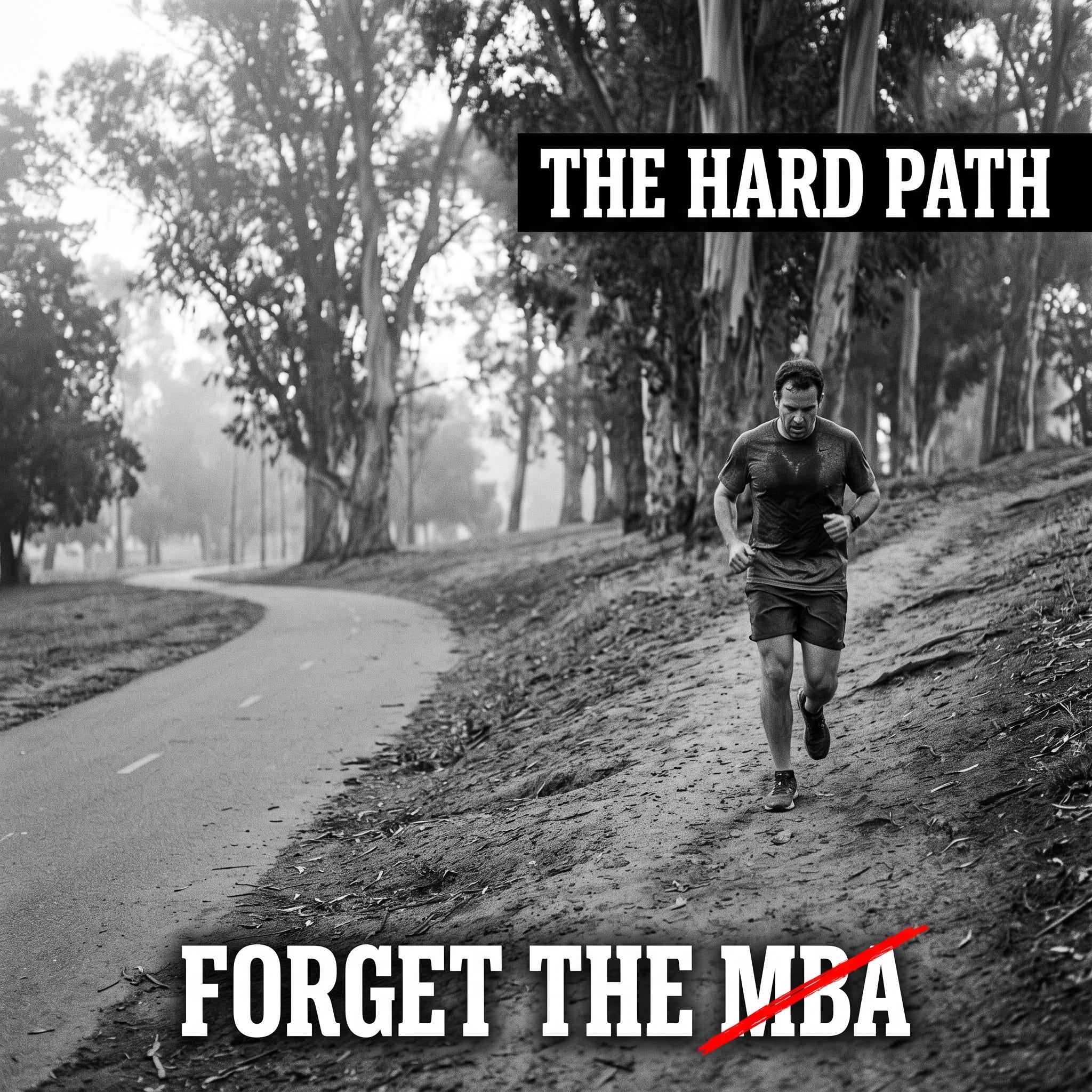
Every Wednesday for four months, I reached the same fork in the running trail Chapultepec Park and turned the wrong way.
I was training for the 2019 Boston Marathon. Wednesday was the tempo run, sixty to ninety minutes at the edge of what my body could hold. At mile three the trail split. Left stayed flat. Right climbed into rolling hills.
I always went right.
My thighs yelled. My pace dropped. And I was angry at the pain, because nobody made me take it.
Then came the worst part. I’d open Strava and check my running mates’ paces. They were always faster. Always.
Every cell in my body begged me to turn left to the flats. I never took it. But I questioned it more often than I like to admit. What if I’m hurting for nothing?
Then came Boston. My friends’ breathing got heavier. Their legs started to complain. Mine felt fresh. By mile ten the pod was gone and I was running alone.
I finished 89th out of 30,000. The fastest Mexican in the race.
We had trained the same way all season. Except Wednesdays.
Easy decisions, hard race. Hard decisions, win easy.
When it gets real
Peter Rahal sold RXBAR for $600 million. After that he decided to take the flat trail: became an investor. No team to run. A great lifestyle.
He tried it for about a year and was miserable. He calls it fake working.
So he went back to protein bars and started David. On David Senra’s podcast, he put it plainly.
“I always choose the hard path.”
He skips the stroller and carries his son. But that, he says, is the easy kind of suffering.
“What’s nice about building a company is it’s emotional suffering. It’s a lot of tough conversations.”
That hill shows up long before you have a company. Telling your boss you are leaving. Telling your partner what it will cost. Asking a friend to build it with you.
Most of us are not avoiding hard work. We are avoiding hard conversations.
Worth your time
Read How to Make Wealth by Paul Graham. It is a long essay from 2004, and buried in it is the best rule I know for choosing the hard path on purpose. At Viaweb they called it run upstairs: when a big, slow competitor is chasing you, take the stairs up. It is hard for you. It is harder for him.
Final thoughts
For four months the hills made me look slower. The flat trail always looks smarter while you are on it. The difference only shows up in the long run.
My hills were on a trail in Mexico City. Rahal’s are in the conversations most people dodge.
Thanks for reading.