

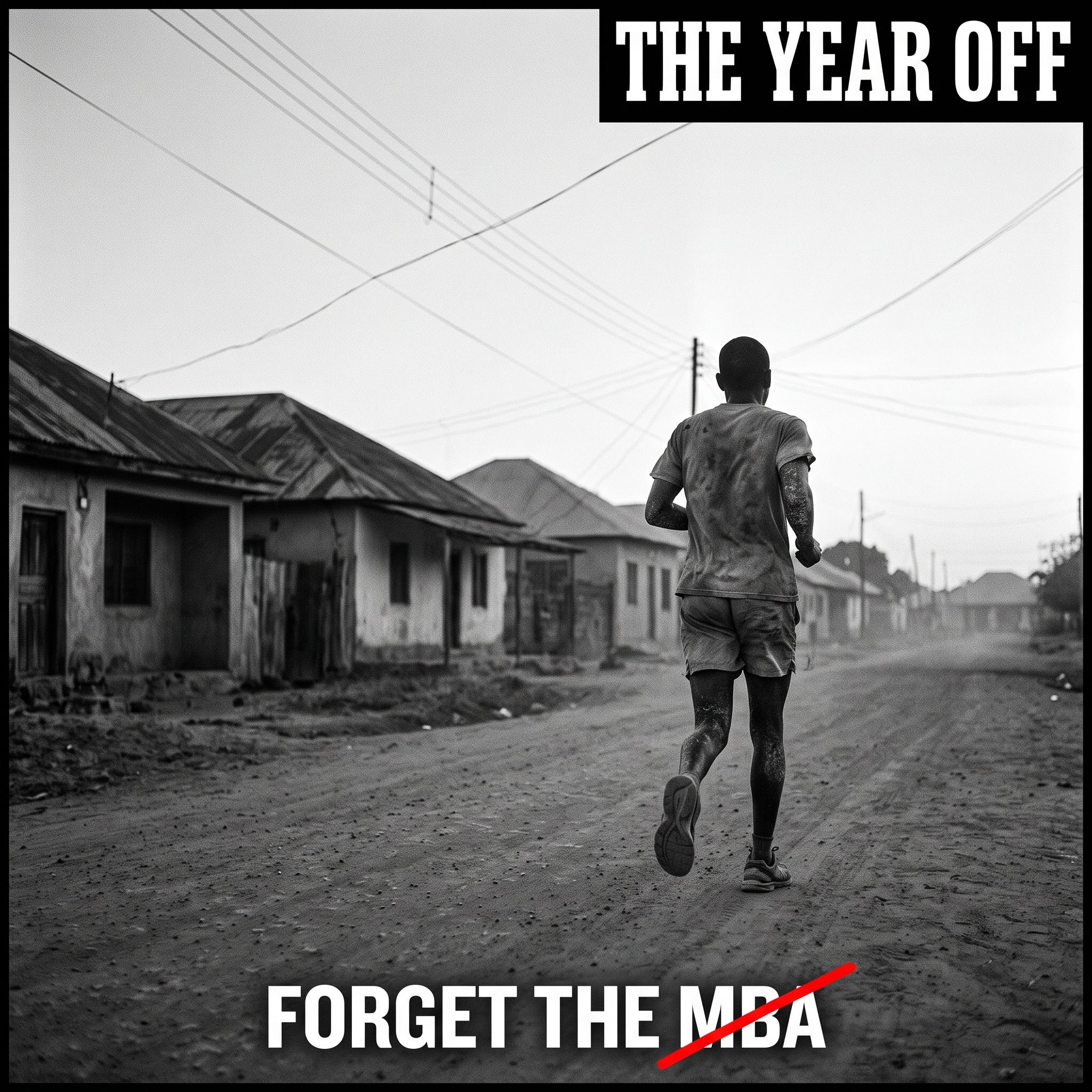
In 1962, Phil Knight had a Stanford MBA, a 4:13 mile from his years running for Bill Bowerman at Oregon, and no job.
He did have a crazy idea. For a small business class, he had written a paper asking whether Japanese running shoes could do to German shoes what Japanese cameras had done to German cameras.
So instead of starting a career, he went around the world.
He spent ten weeks in Hawaii, selling encyclopedias door to door and surfing. Then Japan. In Kobe he got a meeting with Onitsuka, the maker of Tiger running shoes. When the executives asked which company he represented, he invented one on the spot: Blue Ribbon Sports of Portland, Oregon. He walked out with the rights to sell Tigers in the western United States. His father sent a $50 money order for samples.
Then he kept going. More than a dozen cities across Asia, the Middle East and Europe. In Athens he stood at the Acropolis, in front of the temple of Athena Nike, goddess of victory.
He came home and took a job as an accountant.
On paper, it was a long detour. But he came home with something in his pocket. Nine years later, the company built on that Tiger deal needed a new name. An employee, Jeff Johnson, suggested one: Nike.
When it gets real
Most of us can’t take a year off. Knight’s ended at an accounting desk, and he built the company around the day job.
Sam Altman took one after selling his first startup. On the Y Combinator podcast he told Craig Cannon what it looked like:
“I read many dozens of textbooks, I learned about fields that I had been interested in. I didn’t have any idea they were all going to come together in the way they did.”
Nuclear engineering. AI, which was just starting to work. Synthetic biology. When he met someone interesting who needed help, he helped.
“Out of all of it, almost all of it didn’t work out. But, the seeds were planted for things that worked in deep ways later.”
Two years later he was running Y Combinator. A year later, he co-founded OpenAI.
Neither was hiding. Both were out there trying things.
Worth your time
Read Range by David Epstein. It opens with Tiger Woods, who specialized as a toddler, and Roger Federer, who played everything before he picked tennis. Its whole case: in messy, unpredictable fields, people who sample widely before they specialize tend to end up ahead. If you have ever felt behind because your path wandered, start here.
Final thoughts
Knight looked like a guy who couldn’t commit. Altman looked like he had quit. Both looked wrong from the outside. Both were collecting pieces.
The difference between wandering and hiding is what you come home with. Knight came home with the rights to sell shoes.
If you took your version of that year, what would you come home with?
Thanks for reading.