
When I started running competitively, there were a dozen of us at roughly the same level, all chasing the same number.
Two hours and fifty minutes. That was the mark for a fast semi-elite marathoner, the thing you said out loud when someone asked what you were training for. Everyone in my group woke up aimed at 2:50.
One day I decided to aim at 2:40 instead. Ten minutes faster- it might not sound like too much, but at those speeds, 10 minutes is a different category altogether.
The test I used then and still use is simple. The number has to scare me and still leave a real chance I miss it. Not a fantasy I have no business chasing, and not a lock either. Something I might genuinely fail at, maybe one attempt in five. 2:40 sat exactly there.
I told nobody except my coach, who adapted my initial 2:50 training regimen to a 2:40.
My running sessions looked almost identical to those of the other runners. Mine were marginally longer and marginally faster. A small gap that in the long run, was supposed to compound.
Race day came. Some of my colleagues broke 2:50 and several did not. I ran 2:38.
Afterwards people decided I was gifted. They talked about my cardiovascular system, my build, some genetic luck they assumed I had drawn. Nobody understood the truth, which is that I had not outrun them that morning. I had beaten them nine months earlier, on the day I picked a different number.
When it gets real
Torsten Reil sold his first company, NaturalMotion, to Zynga for $527 million. By any ordinary measure, a career-defining win.
On David Senra’s Founders podcast this week, he named what actually holds builders back.
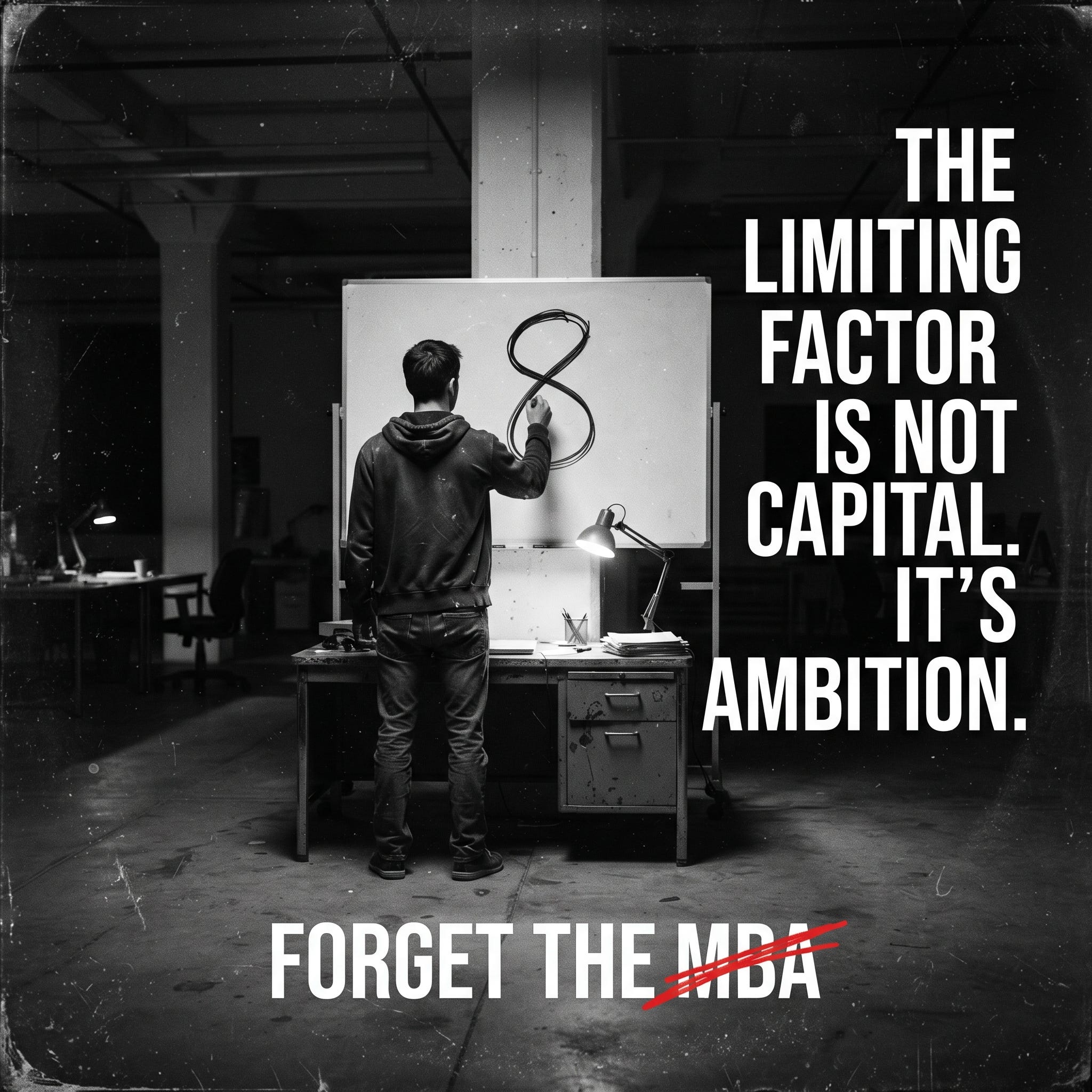
“The limiting factor is not capital, it’s like actually ambition.”
His complaint about European founders is simple. They sell too early. They take the good outcome, the 2:50, and go home before finding out what they were capable of.
So he did the other thing. He co-founded Helsing, a defense AI company, at a moment when defense was unfashionable and investors would not touch it. Defense is not everyone’s cause and I understand the flinch, but stay with the arithmetic. His description of that bet carries no hedge.
“We either kind of completely crash the thing or be super successful.”
In July, Helsing raised $1.8 billion at an $18 billion valuation, Europe’s largest defense round ever. Thirty four times the exit already in his pocket.
Same guy. Different goal. That is the whole gap.
Worth your time
Read Freedom’s Forge by Arthur Herman, one of the books Reil pointed to. It tells how two businessmen turned American car factories into aircraft plants and rebuilt a hollow army into a global force in four years. It is the best argument I know that the ceiling on what gets built is almost never the resources.
Final thoughts
We spend everything on execution and almost nothing on the number underneath it. But you pick the number first, and it quietly decides what all that effort is worth.
The people around you are aiming at something. Copying it feels like ambition, because everyone is working hard. It is really inheriting a ceiling somebody else set.
What number are you chasing, and who chose it?
Thanks for reading.
Share Forget the MBA: